Boomerang Measurements

You can tell a lot from how a story starts. If you hear “Once upon a time …” you’ll probably hear a fairy tale like “The Three Little Pigs” or “The Little Red Hen”. Around camp fires, kayakers like to tell stories that begin with “No kidding, there I was …” and a tale of [...]

Beating Brook's Law

Joe Little does a marvelous job recruiting speakers for the Agile-Carolinas meetings. This month was no exception. Israel Gat from BMC Software discussed “Leading the Disruption”. This presentation focused on releases 2.3 and 2.4 of their distributed system management software. Near the presentation’s end Brooks’ Law was mentioned and the question posed, “Does Brooks’ Law [...]

A Quick Update

A quick update on systems thinking [...]

A Multi-use Model

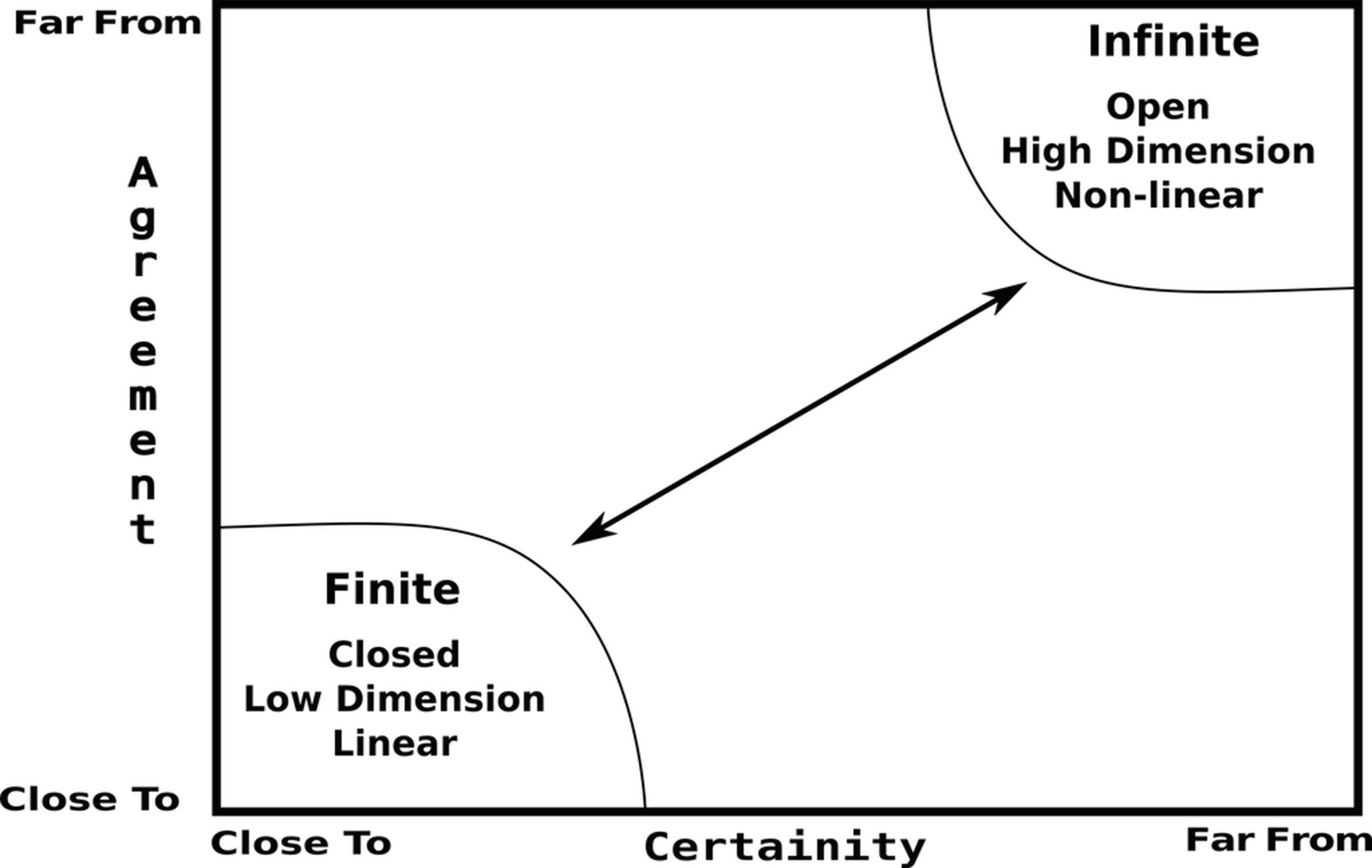
Models are like kitchen utensils. You need a variety of them, and you should know when and how to use them. They should be useful for more than a single task. I recently started exploring the first explicit model I learned years [...]

Force Ranking Force Dynamics

Esther Derby recently ranted about Force Ranking. I’m not an expert on force ranking, or maybe as an independent consultant I am. I’m force ranked every time I work with a [...]

“There-Then-Them” / “Here-Now-Us”

I’m catching up on some reading this week, and I just read Willem’s disagreement with Jerry’s thoughts. Truth be known, I agree with both Jerry and [...]

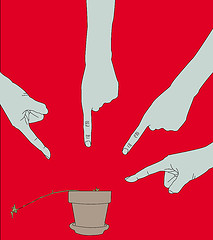
So What's the Problem?

I would say that the root of the problem or “cause” was the pure and simple fact, that a poor decision was made to “band aid” a poorly designed system. If the correct decision was made in February of 2004 [...]

So, What is a System?

I’m working backwards. I started this entry on defining change. Then I realized change can’t exist without systems. So, what is a system? I like the following (heavily inspired by Systems Thinking Basics: From Concepts to Causal [...]

Reverse Engineering Reality Part 2: Creating Causal Loop Diagrams

Causal Loop Diagrams (CLDs) share several things with books: they both tell stories, they can be fact or fiction, and they’re both easier to read than write. Keep reading to learn how to write CLDs.

The Buddy System

The first step in creating CLDs: find a buddy, friend or coworker with whom to share the diagram. [...]

Reverse Engineering Reality Part 1: Reading Causal Loop Diagrams

Causal Loop Diagrams (CLDs) can help us understand complex interactions and events by revealing system structure. Unlike buildings, most systems don’t have visible structure. We notice systems by observing events. When the events form a pattern (usually over time), there’s indication that a system is working. We use CLDs to diagram the [...]